
Decentralized Finance (DeFi) has exploded in popularity and is now one of the major use-cases of blockchain technology. With this trend, many new ways to grow your crypto assets are emerging. Let's deep dive into crypto lending — one of the most popular DeFi examples.
You already know what lending is
You've probably heard of people taking loans when they're short on cash. It'd be either a bank or company lending them some money, which needs to be repaid with some interest. That interest is how the bank or company makes money. What if you were the one receiving interest instead?
How does crypto lending work?
In short, crypto lending is an alternative investment form where investors lend fiat money or cryptocurrencies to other borrowers in exchange for interest payments. There are two main parties involved:
- The lender, who receives interest from the borrower in exchange for the loan.
- The borrower, who deposits crypto-assets as collateral to secure the lender's investment.
The collateral ensures that if something goes wrong, the lender will be compensated.
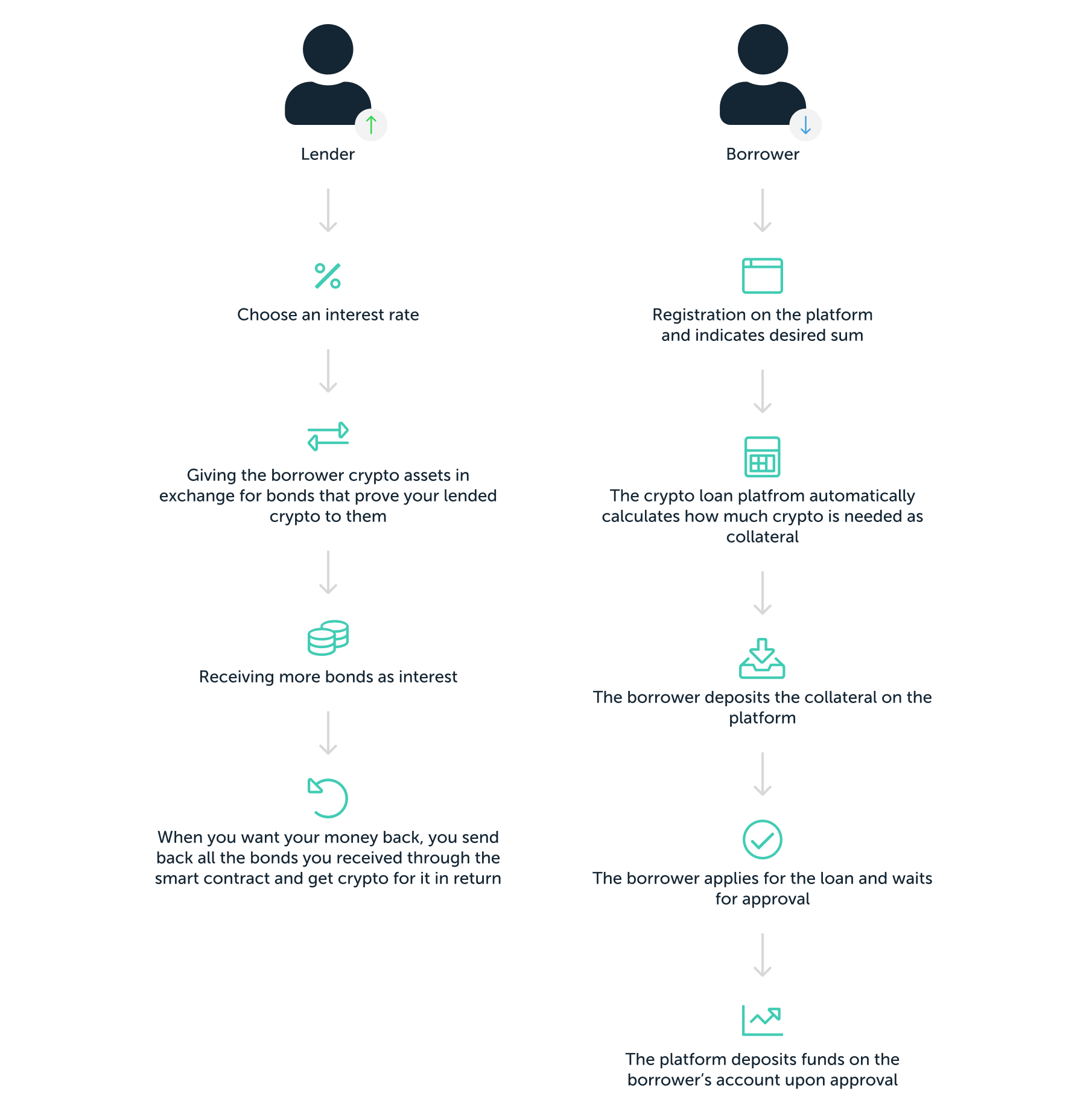
Why would I want to lend my crypto?
Attractive interest rate
The main benefit for lenders is interest. You will potentially get back more crypto than the amount you've lent out, making a profit without needing to actively do anything — a nice passive income. On top of that, the interest rate is typically far more attractive than a standard savings account.
Avoid crypto volatility
You are able to lend the crypto you want. However, lending stablecoins — cryptocurrencies pegged to real-world assets like the US dollar — allows you to grow your assets without the price variation risk typical of crypto. You'll know approximately how much you'll be getting back. Of course, zero risk does not exist, especially in crypto.
Crypto Lending Best Practices
Do your own research
This cannot be said often enough. You don't want to accidentally entrust a poorly secured platform or a scam. Go with lending platforms or smart contracts that have had their security audited and have a good track record.
Don't be in a hurry
Don't lend out crypto you want to cash out soon — you cannot sell what you've lent out. Also remember that even with the best security auditing, hacks may happen. Keep in mind that crypto may sometimes be lost.
Know the parameters
Understand the terms of the loan: when you'll get your crypto back, how much interest you'll earn, and what happens if the borrower can't repay. Make sure the platform or smart contract has a solid backup plan — through insurance or collateral the borrower locked away.
How can I start lending my crypto?
Exchanges and platforms
Crypto exchanges and custodial platforms like Binance, Coinbase, or Nexo can provide lending services. These are centralized services — they act as a middleman between you and the borrower. You send your cryptocurrencies to their platform, and repayments are returned to an address on their platform, remaining in their control until you manually withdraw.
While often user-friendly with a wide selection of assets, these options may require you to create an account and complete Know Your Customer (KYC) verification.
Decentralized Finance
Several DeFi protocols like Compound allow you to lend out your cryptocurrencies without a middleman. Instead, a smart contract handles the loan automatically when predetermined conditions are met.
When lending via DeFi, your assets are sent to a smart contract. In return, you receive tokens proving you are the owner of those lent assets. The most well-known DeFi lending protocols are well audited and public — giving some reassurance, though vulnerabilities can never be fully excluded.
In DeFi lending, you trust the code, not a company. Make sure the code has been audited.
One limitation: DeFi smart contracts are limited to a single blockchain, so the assets you can lend are often restricted to ERC-20 tokens on Ethereum.